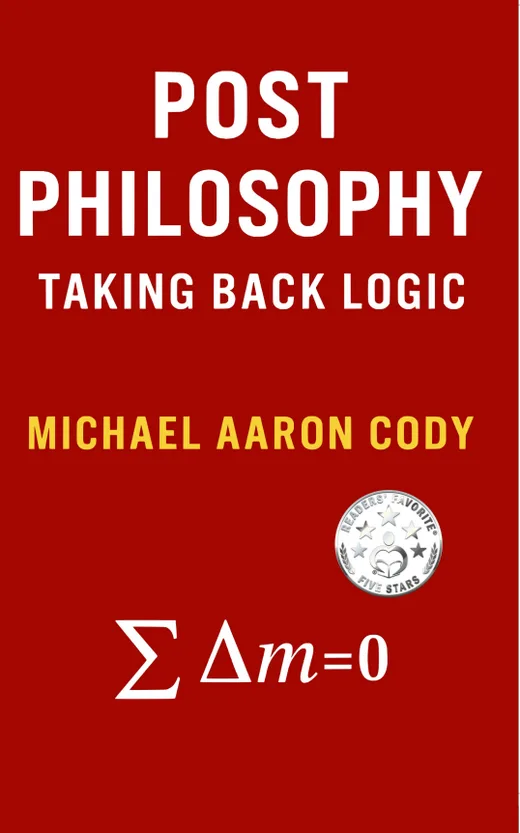
Published in Springer Nature's European Physical Journal Plus, the Journal of Modern Physics, Taylor & Francis's Defence Studies, Philosophy and Cosmology, and the International Journal of Mathematical Education in Science and Technology, among others. Author of Post Philosophy: Taking Back Logic.
My work takes systems apart to find the assumptions they rest on, then tests whether those assumptions hold. In physics, that meant the first mechanical failure criterion for black holes, a proof that CMB blackbody preservation does not require metric expansion, and a demonstration of observational degeneracy across classical cosmological tests, putting static universe models back on the table after a century of dismissal. In defense, it meant showing that attrition economics, not doctrine, is pushing humans out of exposed combat roles.
In 2026, Flexible Static Cosmology (FLSC) was launched as a program to bring static cosmology back into serious scientific consideration. Built on the K(t) redshift kernel, FLSC treats the universe as finite, with a geometry that can flex within limits rather than expand without bound.
The work spans physics, defense, philosophy, and education. No institution. No funding. Just the work. Twenty years of formal education and self-directed training.
When thought becomes a gate rather than a generator, logic dies and legacy masquerades as truth.
From “IQ Tests Were Meant to Help Children, Not Rank People”, The American Spectator
Latest essays
The Authority Chain of Science
RealClearScience
On November 20, Anthropic mathematician Levent Alpöge released a Lean library described as a proof of the Riemann Hypothesis, roughly 17 million lines of code built with heavy help from Claude. The essay argues that code that compiles has been verified, not understood, and contrasts it with Einstein's 31-page relativity paper and Perelman's 68 pages on the Poincaré conjecture, which still took the field years to absorb. When a lab announces and the press relays, credibility passes from link to link, and the explanation becomes somebody else's problem.
How Bad Science Gets a Good Headline
RealClearScience
A headline built on institutional trust can carry authority the study behind it hasn't earned. The essay walks through BICEP2's "first direct evidence" of inflation, later traced to galactic dust; the 2022 "wormhole" that Caltech said was never made; the University of Ottawa's 26.7-billion-year-old universe; and the "next Einstein" label pinned on Sabrina Pasterski. Its advice to readers is simple: read the paper, not the press release.
Contact
Send a message below, or email me directly at Mac92contact@gmail.com.